Is It Legal to Sell a Game Made with AI? Steam Rules and Copyright
Yes, you can sell a game made with AI. What Steam’s January 2026 AI disclosure rules require, what US copyright law says, and a checklist before you ship.
 Sreeja VallamullaCo-founder, ZeroAtoms2 min read
Short answer: yes, it's legal to make and sell a game that uses AI, and thousands of games on Steam do. On Steam you disclose AI-generated content that players see or hear, and you describe your safeguards if the game generates content while it runs. Separately, in the US, purely AI-generated material isn't protected by copyright, but the parts you create, select, arrange or meaningfully modify can be.
This is general information, not legal advice. For anything specific to your game, talk to a lawyer.
Steam's AI disclosure rules (updated January 2026)
Valve rewrote its AI disclosure form in January 2026. The main change is focus: it's about AI content that ends up in the game, not the tools you used to make it.
You don't need to disclose AI tools used for efficiency behind the scenes, such as a coding assistant.
You do need to disclose two kinds of content:
- Pre-generated content. Art, models, sound, voice, music or text created with AI during development that ships in your game. It's reviewed under the same content rules as anything else.
- Live-generated content. Content AI creates while the game is running, such as generated dialogue or images. You must describe the guardrails that stop it producing illegal content, and the disclosure appears on your store page. Players can also report illegal live-generated content through the Steam overlay.
What US copyright law says
In January 2025 the US Copyright Office published a report on the copyrightability of AI-generated material. The key points:
- Human authorship is required. Material generated entirely by AI isn't copyrightable.
- Prompts alone usually aren't enough to make you the author of the output.
- Your contributions can be protected: content you create yourself, AI material you modify in a creative way, and your creative selection and arrangement of AI output.
For games, this works in your favor. A game is far more than its individual assets. Your design, level layout, writing, code you direct, the way assets are combined, and the edits you make are all places where human authorship lives. Keep records of your process: your design document, your edits and your iterations.
Rules differ by country, so check the law where you publish if you sell outside the US.
Check each tool's terms
Every AI tool has its own terms for commercial use, and some vary by plan. A few open models also restrict where and by whom they can be used. For example, Tencent's Hunyuan3D 2.0 license excludes the EU, the UK and South Korea. Before you ship, confirm:
- Your plan on each tool allows commercial use.
- You meet any regional or company-size limits.
- Voice tools allow game use of the voices you cast, and you have rights to any voice you cloned.
Checklist before you submit to Steam
- List every type of AI-generated content in the build: art, 3D, animation, voice, music, text.
- Note whether any content is generated at runtime, and write down your guardrails.
- Confirm commercial rights for every AI tool and plan you used.
- Keep your design documents and edit history.
- Fill in Steam's AI disclosure accurately. It's shown to players, so honesty builds trust.
If you're still choosing tools, our comparison of AI game makers and AI 3D model generators are good next reads.
Frequently asked questions
Is it illegal to make a game with AI?
No. Making and selling games that use AI is legal. Platforms such as Steam ask you to disclose AI-generated content, and each AI tool has its own terms for commercial use.
Do I have to disclose AI use on Steam?
Yes, for AI-generated content that ships in the game or is generated while it runs. Since January 2026 you do not need to disclose AI tools used only behind the scenes, such as coding assistants.
Can I copyright a game made with AI?
In the US, purely AI-generated material is not copyrightable, but your own contributions are: your design, writing, code, modifications, and the selection and arrangement of AI material. Most of what makes a game a game is human-authored.
Will players avoid my game if it uses AI?
Some players care, which is why accurate disclosure matters. In practice, players judge games on whether they are fun, polished and honest about how they were made.
Keep reading
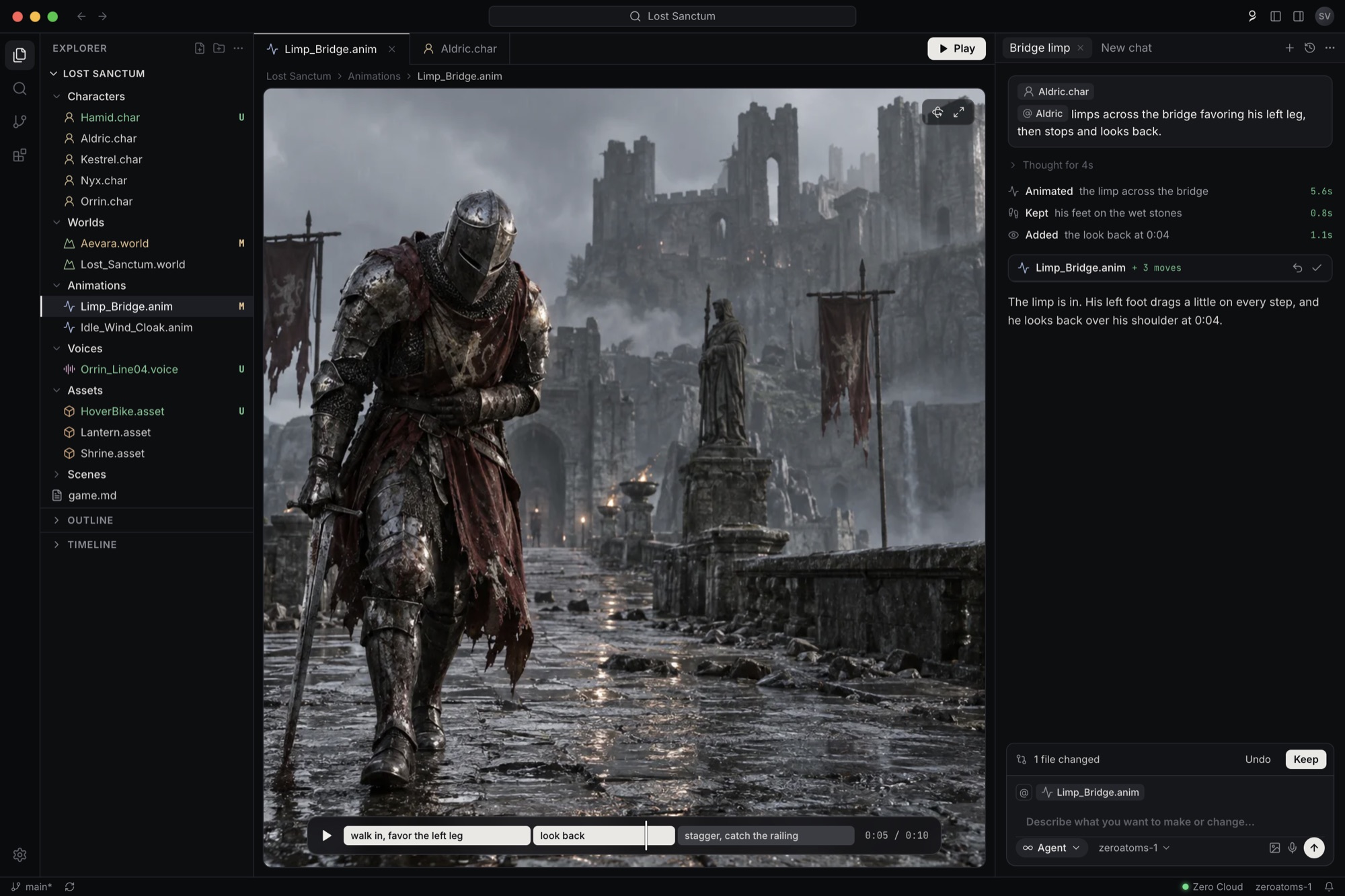 The Best AI Game Makers and Engines in 2026, ComparedAn honest comparison of AI game engines and makers in 2026, including ZeroAtoms, Summer Engine, Rosebud AI, Unity AI, Unreal and Godot, and which fits you.
 How to Make a 3D Game with AI (No Coding Required)Yes, you can build a 3D game with AI and no coding. A step-by-step guide: plan the game, build the world, cast characters, direct animation, add voice, ship.
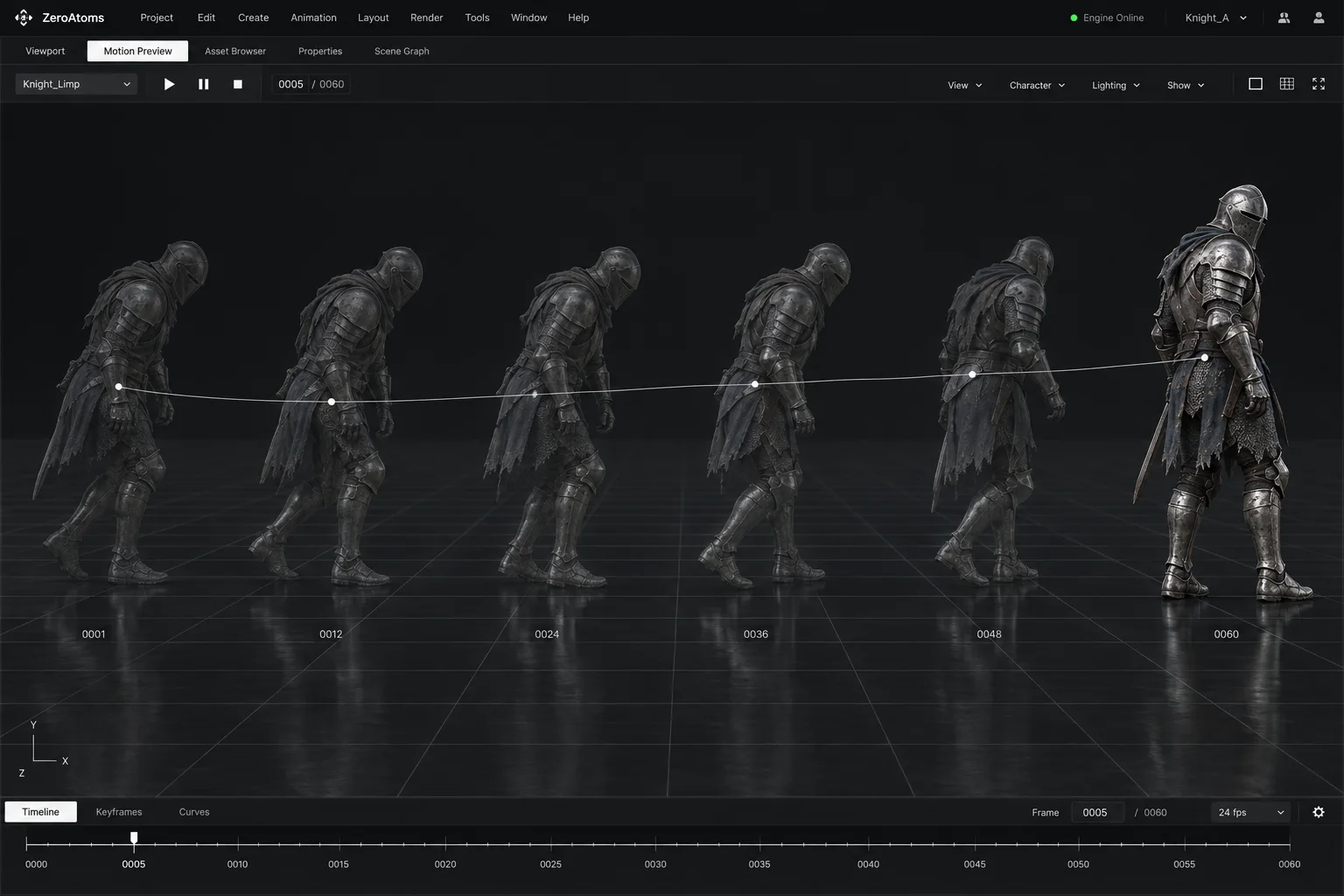 How to Animate Game Characters with Text PromptsHow text-to-animation works for game characters, how to write motion prompts that look natural, and how it compares to keyframing, mocap and Cascadeur.