Game Dev Glossary: 30 Terms Explained in Plain English
Rigging, LODs, retopology, UVs, PBR, blendshapes, IK and more: 30 game development terms explained in plain English for people new to making 3D games.
 Sreeja VallamullaCo-founder, ZeroAtoms2 min read
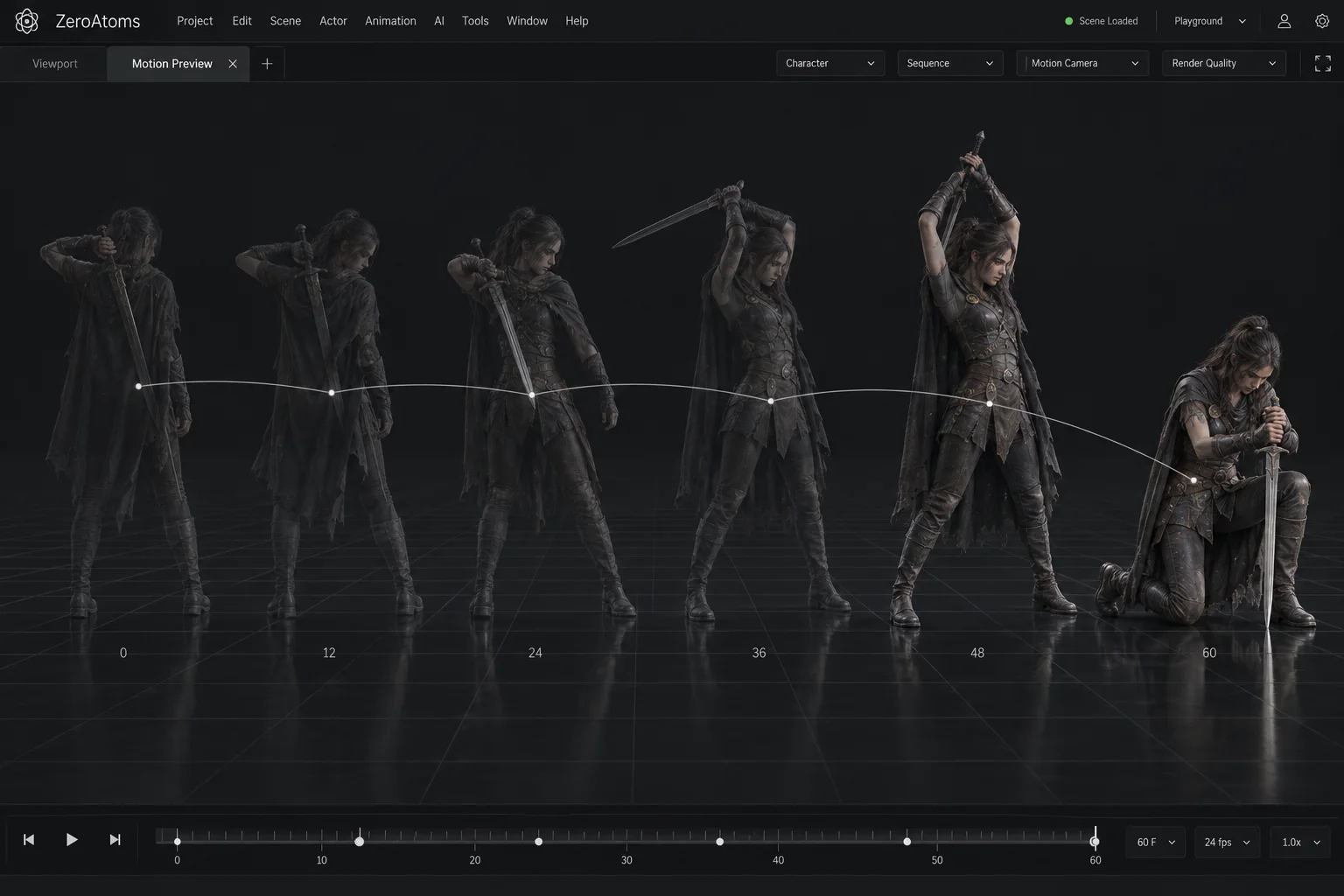
New to making games? These are the terms you'll see most often when working with 3D characters, worlds and AI tools, explained without jargon.
Models and assets
Asset. Anything that goes into a game: a character, a sword, a sound, a texture, a level.
Mesh. The 3D shape of an object, made of many small flat faces.
Polygon / triangle count (tris). How many faces a mesh has. More means more detail but more work for the computer. Games keep a budget for this.
Topology. How the faces of a mesh are arranged. Good topology bends cleanly when a character moves.
Retopology. Rebuilding a dense or messy mesh with clean, efficient topology. AI-generated models usually need it.
UVs / UV mapping. Unfolding a 3D surface into 2D, like a sewing pattern, so a flat texture can wrap around it correctly.
Texture. A 2D image painted onto a model's surface.
PBR (physically based rendering). A way of describing materials (albedo, roughness, metallic and normal maps) so they react to light realistically.
Normal map. A texture that fakes small surface detail, like scratches or stitches, without adding polygons.
LOD (level of detail). Lower-detail versions of a model shown when it's far from the camera, so big worlds stay fast.
Collision / collider. A simple invisible shape that the physics system uses so players can't walk through objects.
Pivot. The point an object rotates and scales around. For props it's usually at the base.
Characters and animation
Rig / skeleton. The invisible bones inside a character that make it move.
Rigging. Building that skeleton and connecting it to the mesh.
Skinning / weights. How strongly each bone pulls on each part of the mesh.
Blendshapes (morph targets). Pre-made face shapes, like a smile or a blink, blended together for expressions and speech.
Visemes. Mouth shapes for speech sounds, used for lip-sync.
Keyframe. A pose at a specific moment. Animation software fills in the motion between keyframes.
IK (inverse kinematics). Positioning a hand or foot and letting the engine work out the rest of the limb. Foot IK keeps feet planted on uneven ground.
Retargeting. Moving an animation from one skeleton to another with different proportions.
Motion capture (mocap). Recording a real performer's movement and applying it to a character.
Text-to-animation. Generating motion from a written description. See how to animate characters with text.
Worlds and engines
Game engine. The software that runs your game: rendering, physics, sound, input and the editor you build in.
Level / scene. A playable space with everything in it.
Terrain. The ground of an outdoor world: hills, cliffs, riverbeds.
Navmesh. A simplified map of where characters can walk, used by AI-controlled characters to find paths.
Global illumination (GI). Light bouncing between surfaces, which makes scenes look natural.
Volumetrics. Light passing through fog, smoke or dust, like god rays.
Frame rate (FPS). How many images the game draws per second. 60 is a common target.
Build. A packaged, playable version of your game that you can share or ship.
Ready to put these to use? Start with how to make a 3D game with AI.
Frequently asked questions
What is rigging in game development?
Rigging is building a skeleton inside a 3D character and connecting it to the mesh so the character can move and be animated.
What is an LOD in games?
An LOD, or level of detail, is a simpler version of a 3D model that the game shows when the object is far from the camera, so large worlds run smoothly.
What is retopology?
Retopology is rebuilding a dense or messy 3D mesh with clean, efficient geometry that deforms well in animation. AI-generated models usually need it before use in a game.
What are blendshapes?
Blendshapes, also called morph targets, are pre-made versions of a face, such as a smile or a blink, that are blended together to create expressions and lip-sync.
Keep reading
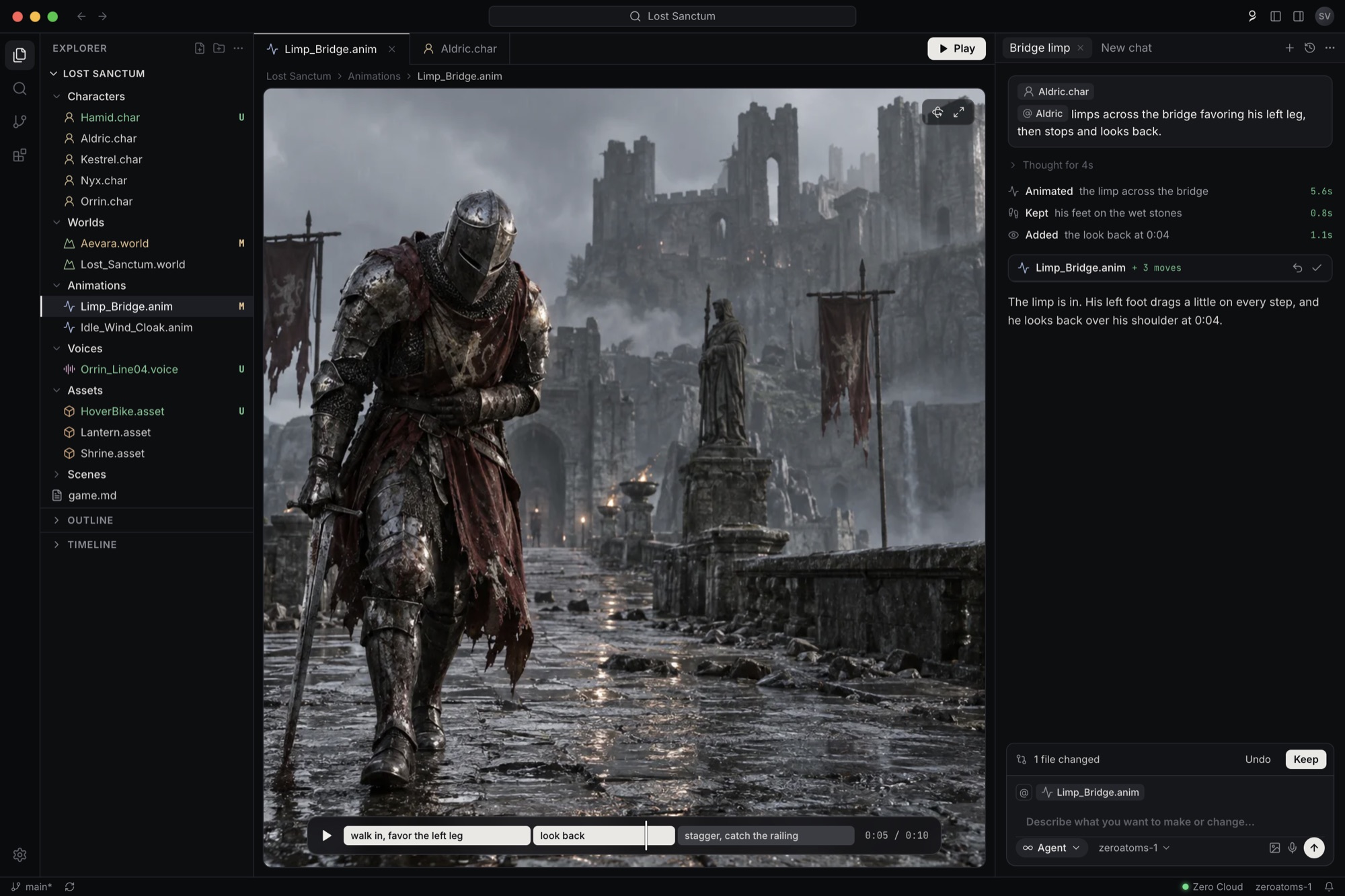 The Best AI Game Makers and Engines in 2026, ComparedAn honest comparison of AI game engines and makers in 2026, including ZeroAtoms, Summer Engine, Rosebud AI, Unity AI, Unreal and Godot, and which fits you.
 How to Make a 3D Game with AI (No Coding Required)Yes, you can build a 3D game with AI and no coding. A step-by-step guide: plan the game, build the world, cast characters, direct animation, add voice, ship.
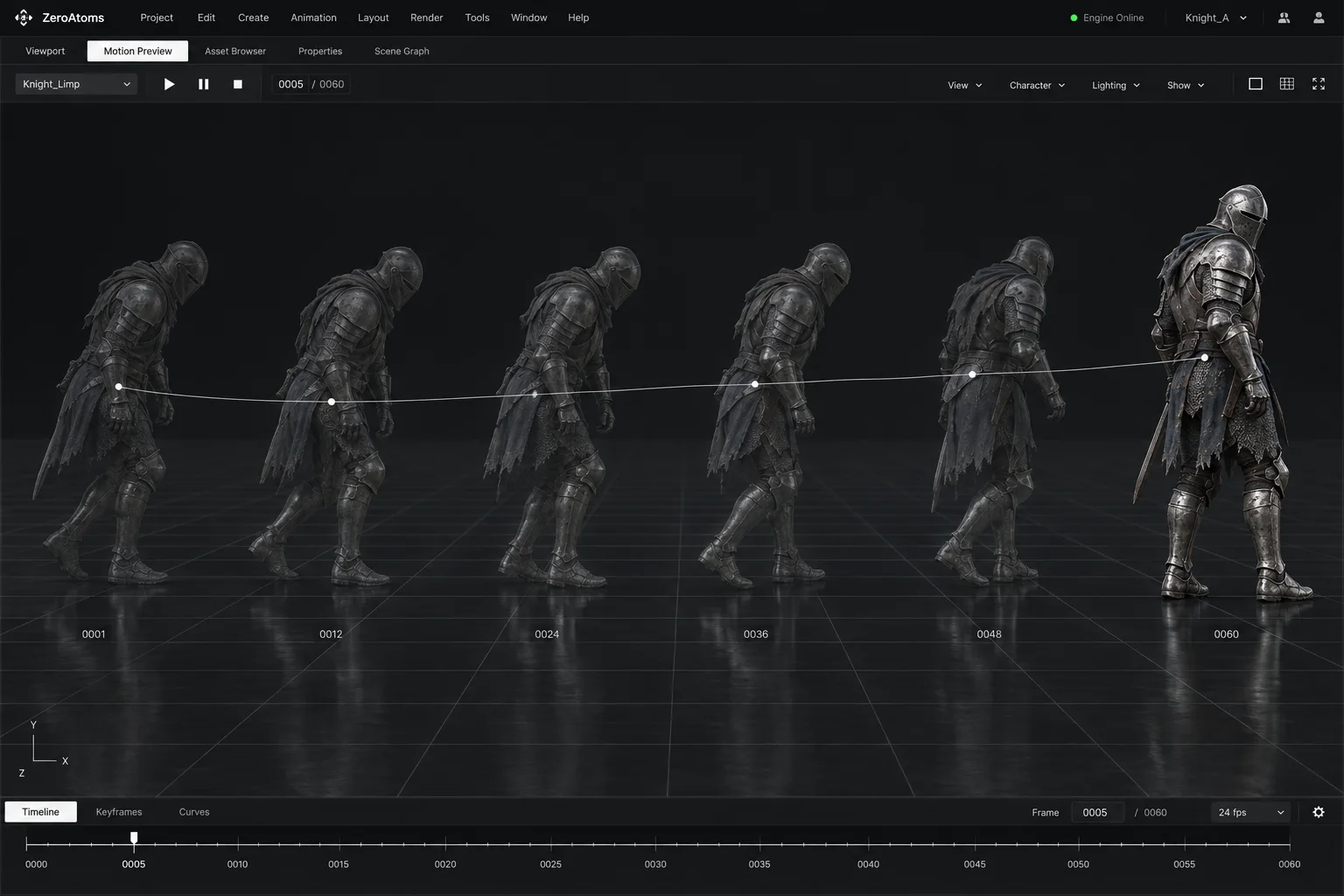 How to Animate Game Characters with Text PromptsHow text-to-animation works for game characters, how to write motion prompts that look natural, and how it compares to keyframing, mocap and Cascadeur.